Friday, January 16, 2015

Draven's Light cover reveal

Excerpt from

DRAVEN’S LIGHT

By Anne Elisabeth Stengl

(coming May 25, 2015)


He heard the drums in his dreams, distant but drawing ever nearer. He had heard them
before and wondered if the time of his manhood had come. But with the approach of dawn, the
drums always faded away and he woke to the world still a child. Still a boy.
But this night, the distant drums were louder, stronger. Somehow he knew they were not
concocted of his sleeping fancy. No, even as he slept he knew these were real drums, and he
recognized the beat: The beat of death. The beat of blood.
He woke with a start, his leg throbbing where it had just been kicked. It was not the sort
of awakening he had longed for these last two years and more. He glared from his bed up into the
face of his sister, who stood above him, balancing her weight on a stout forked branch tucked
“Ita,” the boy growled, “what are you doing here? Go back to the women’s hut!”
His sister made a face at him, but he saw, even by the moonlight streaming through
cracks in the thatch above, that her eyes were very round and solemn. Only then did he notice
that the drumbeats of his dream were indeed still booming deep in the woods beyond the village
fires. He sat up then, his heart thudding its own thunderous pace.
“A prisoner,” Ita said, shifting her branch so that she might turn toward the door. “The
drums speak of a prisoner. They’re bringing him even now.” She flashed a smile down at him,
though it was so tense with anxiety it could hardly be counted a smile at all. “Gaho, your name!”
The boy was up and out of his bed in a moment, reaching for a tunic and belt. His sister
hobbled back along the wall but did not leave, though he wished she would. He wished she
would allow him these few moments before the drums arrived in the village. The drums that beat
of one man’s death . . . and one man’s birth.
His name was Gaho. But by the coming of dawn, if the drums’ promise was true, he
would be born again in blood and bear a new name.
Hands shaking with what he desperately hoped wasn’t fear, he tightened his belt and
searched the room for his sickle blade. He saw the bone handle, white in the moonlight,
protruding from beneath his bed pile, and swiftly took it up. The bronze gleamed dully, like the
carnivorous tooth of an ancient beast.
A shudder ran through his sister’s body. Gaho, sensing her distress, turned to her. She
grasped her supporting branch hard, and the smile was gone from her face. “Gaho,” she said,
“I will,” said Gaho, his voice strong with mounting excitement.
But Ita reached out to him suddenly, catching his weapon hand just above the wrist. “I
will lose you,” she said. “My brother . . . I will lose you!”
“You will not. You will lose only Gaho,” said the boy, shaking her off, gently, for she
was not strong. Without another word, he ducked through the door of his small hut—one he had
built for himself but a year before in anticipation of his coming manhood—and stood in the
darkness of Rannul Village, eyes instinctively turning to the few campfires burning. The drums
were very near now, and he could see the shadows of waking villagers moving about the fires,
building up the flames in preparation for what must surely follow. He felt eyes he could not see
turning to his hut, turning to him. He felt the question each pair of eyes asked in silent curiosity:
Grasping the hilt of his weapon with both hands, Gaho strode to the dusty village center,
which was beaten down into hard, packed earth from years of meetings and matches of strength
held in this same spot. Tall pillars of aged wood ringed this circle, and women hastened to these,
bearing torches which they fit into hollowed-out slots in each pillar. Soon the village center was
bright as noonday, but with harsh red light appropriate for coming events.
Gaho stood in the center of that light, his heart ramming in his throat though his face was
a stoic mask. All the waking village was gathered now, men, women, and children, standing just
The drums came up from the river, pounding in time to the tramp of warriors’ feet. Then
the warriors themselves were illuminated by the ringing torches, their faces anointed in blood,
their heads helmed with bone and bronze, their shoulders covered in hides of bear, wolf, and
boar. Ten men carried tight skin drums, beating them with their fists. They entered the center
first, standing each beneath one of the ringing pillars. Other warriors followed them, filling in the
Then the chieftain, mighty Gaher, appeared. He carried his heavy crescent ax in one
hand, and Gaho saw that blood stained its edge—indeed, blood spattered the blade from tip to
hilt and covered the whole of the chieftain’s fist. Gaher strode into the circle, and the boy saw
more blood in his beard. But he also saw the bright, wolfish smile and knew for certain that his
sister had been correct. The night of naming had come.
“My son,” said the chief, saluting Gaho with upraised weapon.
“My father,” said Gaho, raising his sickle blade in return.
 “Are you ready this night to die and live again?” asked the chief. His voice carried
through the shadows, and every one of the tribe heard it, and any and all listening beasts of
forests and fields surrounding. “Are you ready this night for the spilling of blood that must flow
Gaho drew a deep breath, putting all the strength of his spirit into his answer. “I am
Gaher’s smile grew, the torchlight flashing red upon his sharpened canines. He turned
then and motioned to the darkness beyond the torchlight.
The sacrifice was brought forward.


In the Darkness of the Pit, The Light Shines Brightest

Drums summon the chieftain’s powerful son to slay a man in cold blood and thereby earn his 

place among the warriors. But instead of glory, he earns the name Draven, “Coward.” When the 

men of his tribe march off to war, Draven remains behind with the women and his shame. Only 

fearless but crippled Ita values her brother’s honor.

The warriors return from battle victorious yet trailing a curse in their wake. One by one the 

strong and the weak of the tribe fall prey to an illness of supernatural power. The secret source of 

this evil can be found and destroyed by only the bravest heart.

But when the curse attacks the one Draven loves most, can this coward find the courage he needs 

to face the darkness?

Coming May 25, 2015
 Visit Anne Elisabeth Stengl’s blog to enter the giveaway!

Wednesday, December 3, 2014

The Heretic

The Heretic by Henry-Vyner Brooks is a vivid story of the Protestant Reformation in England under Henry VIII.  The story contains a vivid cast of characters, including a Benedictine monk, a leper, and the children of a couple arrested for heresy. While the story is slow to get started, it picks up in the middle and the last two hundred pages or so are quite intense.
Although I generally don’t read historical fiction, the Tudor period is one of my favorite eras, so I thought I’d give this novel a try.  It seemed fairly accurate, not only in terms of events and setting, but with worldviews. One of my pet peeves with historical fiction is when characters have fairly modern worldviews: a 15th-century girl complaining about arranged marriages, for example. Even if I disagree with the historical views, I want characters to be accurate.  It’s not wrong to have ‘progressive’ characters, but they shouldn’t be the norm. And the characters in this book were historically accurate in their perspectives.
The book was a little too long. It covered two or three years, possibly four—necessary for some of the plot points, but perhaps not the best decision for pacing.  It’s an improvement over books in which trials take weeks or months, but the first chapters were so heavy and full of setting the scene and putting all the threads in place that I didn’t feel interested in reading more.

Overall, though, it was a good book, and I will probably reread it at some point.

Thursday, July 31, 2014

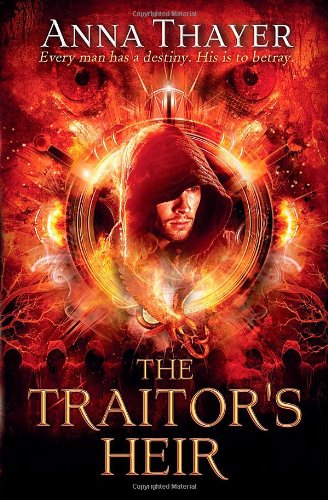
The Traitor's Heir

Eamon Goodman is on the cusp of swearing loyalty to the Master and joining the Gauntlet,  an elite band of men who help maintain order in the River Realm, putting down "snake" uprisings. But when he hears their version of history,  he must reconsider where his loyalties lie.This book is historical-fantasy, with only a few special abilities that would be outside the ordinary; particularly important are the 'breachers,' men who can break into others' minds and discover what they're thinking.
As the first novel in a planned trilogy,  I expected this book to lay the groundwork for further character development and set the main conflict in motion.  Did it succeed? Somewhat.  In over five hundred pages, the main character discovers that the world he's always lived in is more complex than he's been led to believe, but is reluctant to take a stand for either side. Even at the end of the book, I'm not sure which set of vows he'll chose to follow.  Furthermore, I fail to see how one side holds any attraction for him at all--power and pleasure are concretely on the Master's side.  Eamon may have resisted "easy treachery," but I was hoping to see more development by the end of the book.
Overall, the book was interesting, but I doubt I'll re-read it any time soon, and I'm not sure I'd recommend it either.
I received a free copy of this book from Kregel Publications in exchange for an honest review.

Monday, June 30, 2014

Five Glass Slippers


The story of Cinderella has been told many times in many ways. The anthology Five Glass Slippers  contains five variants on the tale with different perspectives on  the characters and settings. The first story “What Eyes Can See,” spends most of its time after the ball, as the prince tries to woo his reluctant betrothed.  Told in a lovely, old-fashioned tone, the contrast between audience expectations and the  characters’ wishes creates a lovely, humorous story.
Rosalind, the heroine of the second tale, “Broken Glass,” has her own plans; while she may want to marry into the royal family, the proposal came from the wrong brother. In order to marry the one she wants, she’ll have to concoct a few schemes of her own.   Likewise, “The Windy Side of Care” features a  heroine who is determined to reclaim the throne.  The last two tales take up the Cinderella tale and resettle it in strange soils—outer space and the realms of faerie.  “A Cinder’s Tale”  occurs on a planetary mining settlement, while “The Moon-Master’s Ball” contains strange, unearthly creatures.

The variety of stories fit together perfectly, providing something for readers with a variety of tastes.  The stories are well-written and enjoyable.

Sunday, June 15, 2014

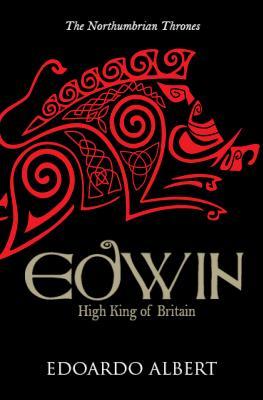
Edwin: High King of Britian

The Roman legions left Britain many years ago, prompting many small kingdoms to rise and fall in their wake. Edwin, the exiled king of Northumbria, has spent nearly a dozen years traveling from court to court,  but when his current protector considers selling him out to his enemy, he sets out to flee again. He is stopped by a mysterious stranger, who prophesies that Edwin will ascend to greater power than any king in the land and learn of a new god.
The story of Edwin and his subsequent rise is told in the Venerable Bede's (8th century) history of England,  but relatively unknown to most people. The author vividly describes the land and people and keeps the plot moving.  Even the strange names are distinct enough to distinguish characters. Not only do readers see Edwin's political and martial triumphs, but the man's personal struggles are well-written and historically grounded.
Even though this book is historical fiction, I would also recommend it to fans of fantasy because of the well-characterized world and the echoes of Arthurian legend.
I received a free copy of this book from  Kregel Publications but was not required to write a positive review.

Friday, June 6, 2014

Merlin's Nightmare

The Arthurian legends have been told in retold over the years, from Lord Tennyson’s poems to the BBC drama Merlin.  Among the many adaptations, the Merlin’s Spiral trilogy stands out  with its emphasis on historical context and portrayal of conflict between Druids and Christianity.
Merlin’s Nightmare, the third book in the series, picks up roughly fifteen years after the High King’s death.  Merlin and Natalenya live in relative peace in the homestead of Ector, raising their own children and Arthur. But the fragile peace is cracking under Saxenow and Pieti invasions.  When Vortigern attempts to raise an army to fight the invaders, Arthur unknowingly heads out to aid the man who killed his father.
Like the previous books, Merlin’s Nightmare blends historical settings with fantastic elements.  While Morganthu and her grandfather may think the Voice and the Stone are under their control, they are playing with wildfire that could easily devour them as well as their enemies.  The unpredictability of this power increases the tension instead of providing an easy solution.
The book ends with a surprising twist that sets up a new series: the Pendragon Spiral, while concluding several threads from the previous books. I am looking forward to the new series and seeing what happens next.

I was given a free copy of this book from BookSneeze in exchange for an honest review.

Sunday, March 30, 2014

Like Insects--Agents of Shield ramblings

Agents of Shield may be the little brother of the Marvel Cinematic Universe, but that's not a bad thing. Complaints about the lack of canonical superheroes miss the point.  Yes, we got to see New York under attack in The Avengers,  we saw SHIELD descend on the New Mexican desert when Thor's hammer fell, but we haven't seen how that knowledge affected ordinary people. How can you sleep at night when you know that aliens could tear open the sky and send down armored beast? If a man can wake from a seventy-year sleep and another swell into a giant green monster, what secrets might other people be hiding? Even the main characters further ground the show. Instead of a raging green monster or a billionaire genius, the main characters are
  • A one-man combat ops team
  • Awkward scientist duo with British accents (yes, the accents are significant. British accents immediately add classiness)
  • An ace pilot with superior unarmed combat skills
  • A civilian hacker with mysterious origins
  • Former right-hand man of Nick Fury
Three pairs of themes keep reappearing throughout the show:  information/secrecy,  trust/loyalty, and government/the little guy. Skye's position as a hacker brings her into conflict with SHIELD on all three fronts.
 The truth is in the wind. It’s everywhere. You cannot stop the rising tide. You will not find us. You will never see our faces but rest assures-we will rise against those who shield us from the truth.
At first, this rhetoric sounds familiar. It is the language of freedom fighters and activists, of the Arab Spring and Soviet-era protesters, of anyone who resists a corrupt government. But Skye's interactions with Mike Peterson  provide another perspective on the little guy fighting the government.
You said if we worked hard, if we did right, we'd have a place. You said it was enough to be a man but there's better then man! There's gods... and the rest of us? What are we? They're giants... we're what they step on.
The devastation of New York showed exactly what happens when gods bring their war to earth.  As Loki said, an ant has no quarrel with a boot, but recognizing their utter helplessness is bound to unsettle the ants And Coulson manages to calm Mike down with an affirmation of "little guys."
 I've seen giants, up close, and that privilege cost me, nearly everything. But the good ones, the real deal? They're not heroes because of what they have that we don't, it's what they do with it.
It's the same theme as Doctor Who-- "nine hundred years of time and space and I've never met anybody who wasn't important."  The Doctor showcases this by his choice of companions; Coulson's team was chosen on similar grounds.  Just as the Doctor and his companions develop trust and loyalty towards each other (with a few exceptions),  the Bus grows throughout the season and develops into a family. Not that this comes easy.

May doesn't want to be there, Ward is used to following procedures, and Skye's loyalty is suspect.  The latter plays a key role in "Girl in the Flower Dress," where she is finally forced to chose sides, but is still in play in "The Hub." Ironically, in the same episode, Skye discovers an irregularity that puts Ward and Fitz at risk.

Coulson repeatedly tells Skye to "trust the system," but his faith in SHIELD bureaucracy is shaken.  Not only did Agent Hand send his team out without an exit strategy, but this was kept a secret. Some agents are sent out without extraction plans--Romanov and Banner--but they know this. Instead, Coulson and the team fly to the rescue in a big damn heroes moment, reminding me of this quote from Firefly:
Simon: You don't even like me. Why'd you come back?
Mal: You're on my crew. Why are we still talking about this?
The team bond is cemented in "The Bridge," and stated outright in the best moment of "TAHITI." After being told Skye's family should have a chance to say goodbye, Coulson says "We're her family." I never doubted he'd do anything necessary to save her, just as the whole team came to his rescue only a few episodes before.

But Coulson's loyalty to his team conflicts with his duty to SHIELD and the secrets they keep. From the first episode, viewers know that Tahiti is a lie, but the double revelation of Coulson's trauma and the serum's origins shake faith in SHIELD. Even Fury's friendship with Coulson is questioned--what sort of man would have a friend undergo half-a-dozen surgeries, have him injected with a serum of questionable origins, and who knows what else, over the objections of the patient and surgeons.  Was this choice motivated by friendship, or did Fury have other objectives in mind?

With seven episodes still to go, we'll have to wait to see how it plays out. My hopes are high for renewal, and the writers have admitted mapping the show out through season three. This show isn't just about aliens or shipping or tiding fans over between movies. It has thematic and character depth with intriguing plots, and I am looking forward to more.