Showing posts with label thrice told tales. Show all posts

Tuesday, September 10, 2013

Thrice-Told Tales: Follow the Yellow Brick Road

As someone told me latelyEveryone deserves the chance to fly
Much like Alice in Wonderland,  The Wizard of Oz is a classic story that has grown and changed through many adaptations: from the original L. Baum book to the hit Broadway musical.  One of my favorite sites, Speculative Faith, has done a series on the changing story. But I'll focus primarily on two other adaptations, as the original is fairly well-known.
 The musically, loosely based on Maguire's novel, takes a lighter tone, portraying the Wicked Witch of the West as a misunderstood rebel, a young woman with a tragic past and a genuine desire to help the folk of Oz . I actually saw it performed in London and was greatly impressed by the special effects. While I was concerned about having a villain protagonist, I thought the show managed to maintain a moral code, if not a Christian one.

On the opposite end of things, "The Great Wishy Woz" is a two-part Adventures in Odyssey serial parodying the normal story, with Metal Guy, Mystic Mountain Lion, and Manny Kin played by familar voices.  It contains four short songs, but my favorite part is the ending, which subverts the traditional ba-humbug wizard while still having a fraud.

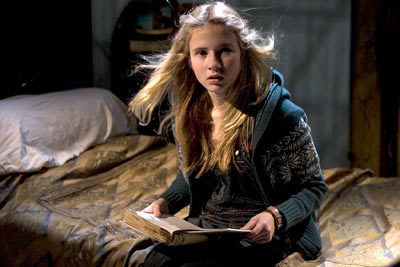
Finally, I'd like to take this opportunity to introduce Namesake, a webcomic that plays with several stories I've already mentioned here, including Alice and the concept of metafiction.  The main character, Emma Crewe, finds herself inside the Wizard of Oz , years after the original Dorothy. I won't say too much more to avoid spoilers (And because I'm about three months behind).

Friday, August 30, 2013

Thrice-Told Tales: We’re All Mad Here


The story of  Alice in Wonderland is one of the early examples of Victorian literature directed at children. I didn't read it too many times when I was younger, but the crazy logic (or lack thereof) has given rise to all sorts of theories about the sanity of its author and audience. People also confuse the first book with events from the sequel, Through the Looking Glass.  I can't really testify one way or the other, but I will say that the Disney animated version crept me out  when I watched it.

The 2010 Tim Burton adaptation is even tripper. I mean, I don't exactly know what's going on, beside that 19-yr-old Alice is having a seriously weird day after refusing to marry some minor dignitary or royalty.  Depp always creeps me out anyway (his Willy Wonka was unsettling, and only part of that was the androgynous costume).

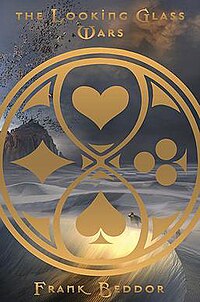
My personal favorite adaptation is The Looking Glass Wars by Frank Beddor. In this version, Alyss Heart barely escapes her aunt's invasion and ends up in our world.  There is also the companion Hatter M. graphic novels, beautifully illustrated stories of Hatter Milligan searching our world for Alyss. The Lewis Carroll novels, in this au, are garbled versions of the stories Alyss told a friend of her adopted family.

Tuesday, August 20, 2013

Thrice-Told Tales: The London Underground

“I mean, maybe I am crazy. I mean, maybe. But if this is all there is, then I don't want to be sane. ” 
--Richard Mayhew

For the last three posts in this series, I will be focusing on stories with multiple adaptations and interpretations, but that still have a definite author.  First of all, I'd like to introduce you to Neil Gaiman's Neverwhere, an urban fantasy set in London. When Richard Mayhew helps an injured girl, he ends up in a strange world that mimics his own.  There's still Earl's Court and Blackfriars and a voice shouting 'Mind the Gap,' but there's an Earl in Earl's Court, the Blackfriars hold a key, and the Gap's a lot larger than expected...

This story began as a six-part BBC drama, but is best known as the novel written afterwards.  It was also adapted into a comic (don't bother) and an excellent Radio 4 drama that will be out in early September featuring Benedict Cumberbatch,   James MacAvoy, Christopher Lee, and Bernard Cribbins, among others.

Because the author was involved with all three productions, there is not much difference between them, though I would recommend the radio production first, if only to hear Benedict Cumberbatch's singing voice.  The book is excellent as well, though the TV show looks rather dated. But hey, try them all if you like.

Saturday, August 10, 2013

Thrice-Told Tales: And then I'll brush and brush, and brush and brush my hair...

Although the story of Rapunzel is fairly well known, it is less-frequently adapted than some of the others, especially Cinderella or Beauty and the Beast.  Part of the reason may include the undercurrents of parental neglect and  (in some versions) teenage pregnancy. 
One version I've read is Zel by Napoli.  When I first read it, I didn't even recognize the original source.  However, if you read it with that knowledge, it provides an entirely different perspective on the story. 
I don't really need to say much about Tangled, the 2010 Disney film, besides that the songs are amazing, the characters are well-developed,and the artwork is gorgeous. 

My last recommendation is a short story written by a friend. The Captain of Chi Lung featured a role-reversed retelling in an Asian setting. Unfortunately, there's no overall link, so you'll have to sort through the ones I provided.

Tuesday, July 30, 2013

Thrice-Told Tales: Rex quondam, Rexque futurus.

Here lies Arthur; King who was, King who will be.
--The Once and Future King


One of my favorite takes on the Arthurian legend is  Gerald Morris's Squire's Tales series. Over the course of ten books, readers are introduced to a new perspective on characters ranging from Gawain and Lancelot to side characters like Enid, Sir Kai, Culwich, and Gaheris. In fact, when I took classic literature in college, I recognized several of the more obscure legends from these books. The author has also created several  memorable and realistic side characters, ranging from Gawain's squire Terrance to orphaned Sarah. The last book, Legend of the King, is a tearjerker of the highest degree, because I know all the characters.

Another interesting series is Mary Stewart's Arthurian quartet. It attempts to take a more historically accurate stance on history--the first novel opens with twelve-year-old Merlin, a bastard, living in Roman ruins and eventually traveling to join Ambrose's army.  Some of the sexual scenes are too detailed for young readers, though it doesn't go far beyond saying two characters are naked in a bed, if I remember correctly.

Finally, the Dark is Rising series brings the Arthurian legends full circle, when the once and future king returns to lead the ancient forces of Light to victory over the Dark. The first two books focus more on the modern day, but the Arthurian element strengthens in latter books with the introduction of Bran.

Saturday, July 20, 2013

Thrice-Told Tales: East of the sun, west of the Moon

“East of the sun and west of the moon.' As unfathomable as the words were, I realized I must figure them out, reason it through. For I would go to this impossible land that lay east of the sun and west of the moon. From the moment the sleigh had vanished from sight and I could no longer hear the silver bells I knew that I would go after the stranger that had been the white bear to make right the terrible wrong I had done him.... "--East, by Edith Pattou*
The next section of Thrice-Told Tales focuses on stories without a strict canon--folktales and legends, with no definite form. Today's post focuses on the old tale, primarily associated with Scandinavia, "East of the Sun, West of the Moon."
The youngest daughter of a large and rather poor family is taken away by an enchanted white bear in exchange for providing for her family. Unknown to her, the white bear is cursed; only by living with him for a year and a day without seeing his true face can she break the spell.  Of course, the condition is broken; the bear is whisked away by the troll queen, only able to tell her that he is going to a land "east of the sun, west of the moon."
East by Edith Pattou is the first version of this story I've found, and one of my favorites. All the characters are well-developed, with reasonable flaws that support the events, making them more plausible. Another version, Sun and Moon, Ice and Snow by Jessica Day George, adds the unique twist of making this reoccurring event--the troll queen has had dozens, perhaps hundreds, of mortal lovers she has toyed with in this fashion.
Finally, East of the Sun, West of the Moon, by Jackie Moore sets the story around the turn of the last century, with the daughter of a refugee going with the bear. I generally like modernized fairy tales, but the ending wasn't satisfying to me, though others might like it.

*image from The Golden Compass

Wednesday, July 10, 2013

Thrice-Told Tales: We're all stories in the End

"My dear Elinor, you were obviously born into the wrong story,” said Dustfinger at last.
 I read a short story once in which the protagonist realizes he's fictional after another character points out that people in books never read books.  While that may be an interesting observation, it's no longer true in the world of modern fiction--or metafiction, as the case may be.
Metafiction is a device that involves characters who acknowledge the roles and tropes of storytelling to various degrees. It also can be invoked by setting stories inside each other.

One of the better-known examples of metafiction is The Princess Bride, both the film and book versions. The book is even more of a mindscrew than the movie, as the narrator elaborates on how his father used to read the book to him as a child, and the struggles he went through to abridge the book and so on. The movie is set up in a similar fashion, with the grandfather interjecting occasional comments such as "she doesn't get eaten by the shark at this time."  If you haven't seen the movie, I won't spoil it for you--just go and see it!

Another story with metafictional elements is the Inkworld trilogy by Cornelia Funke.  The first novel,  Inkworld,  has been adapted into a mediocre film, but the books are better.  Meggie lives with her bookbinder father when a strange man named Dustfinger  appears outside their home, warning them about someone named Capricon.  It turns out that Meggie's dad can read characters out of books, but at a cost--something--or someone--from our world must return to replace them. Not only does each chapter open with  quotes, but there are several shout-outs to other works, such as main characters exchanging notes in in Elvish runes.

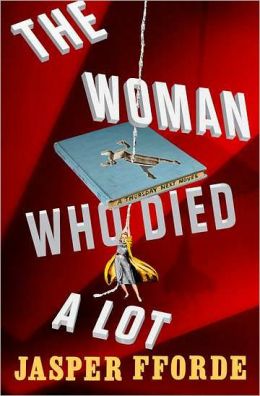
Finally, the Thursday Next series is one of the most hilarious books I've ever read. The main character develops the ability to jump in and out of fictional realms, from Jane Eyre to Great Expectations, but  that's just the beginning. There are also dodos, Neanderthals,  time travel, and maps of the Bookworld, with tons of shoutouts.

Thursday, June 20, 2013

Thrice-Told Tales: Three Volumes of Devilish Correspondance

“There are two equal and opposite errors into which our race can fall about the devils. One is to disbelieve in their existence. The other is to believe, and to feel an excessive and unhealthy interest in them. They themselves are equally pleased by both errors."
--C.S. Lewis, preface to The Screwtape Letters
As the original volume of fiendish correspondence, The Screwtape Letters engages the mind with Lewis's diabolical perspective flip and insights into human nature.  Despite its age, many of Screwtape's remarks are still valid on topics ranging from human interactions to stress. A short story, "Screwtape Proposes a Toast," can be found in many volumes and can be read with equal enjoyment. A special recommendation must go out to Focus on the Family's Radio Theatre adaptation, which features the renown Andy Serkis (Gollum) as Screwtape, managing to create convincing dialogue without sacrificing the text.

On the other hand, Derek Wilson's Magnificent Malevolence rejects the epistolary format in favor of a memoir.  Its attempt to lay out the grand schemes of the Lowarchy over the past fifty years suffers from overly serious tone. Though cheerfulness is not to be expected from demons, the reader is forced to identify so completely with the narrator that there are few, if any, moments of narrative irony.

In contrast, Richard Platt's As One Devil to Another  not only uses a rejected title for Lewis's work, but gained a recommendation from Walter Hooper, official biographer of C.S. Lewis. "Reads as if  C.S. Lewis himself had written it," the cover proclaims. It's a bold statement, but it delivers. Not only have I read it multiple times with enjoyment, but I even convinced my mom (who rarely has time to read and prefers Karen Kingsbury), to give it a try.
The author readily acknowledges his debt to C.S. Lewis, not only in the preface and introduction, but throughout the book, from the senior demon warning his apprentice away from a shelf of Lewis's books to the rant on "That Place by the River" in chapter seventeen. (Addison's Walk, site of Lewis's conversion to Christianity). The book also contains the humor and self-delusion that made The Screwtape Letters a classic, while addressing modern concerns  in a timeless way.


p.s. apparently my auto-publish doesn't work. Bother

Wednesday, June 19, 2013

Thrice-Told Tales: An Introduction

You may have heard that there's only four plots in the world or only seven types of characters. While that's a gross oversimplification, it's true that many stories share similar elements. To keep my blog regularly updated this summer, I decided to start a series focusing on stories that share similar elements, grouped in three sets of threes. The updates will be published on the 10th, 20th, and 30th of the month until complete.
The first set will focus on stories with similar concepts--for example, the first post will feature three examples of devilish correspondence. The second set will showcase retelling of old stories with no set canon, while the series will end with three stories with multiple adaptions. 
As an example, I will start by naming three stories with one element in common: an oracular/powerful head.  
  1. That Hideous Strength, by C.S. Lewis
  2. A Wrinkle in Time by Madeline L'Engle
  3. Brief Lives, volume eight of the Sandman series by Neil Gaiman
In That Hideous Strength, the Head originally belonged to an executed murderer, but has become the vehicle for more sinister energies. The head in A Wrinkle in Time, however, is an enslaving hive mind, threatening the heroes.  The final head, belonging to the famed Orpheus of Greek mythology, still possesses its famed musical skill, but its true role in Brief Lives is as a catalysis for the final arc of Morpheus's journey.